
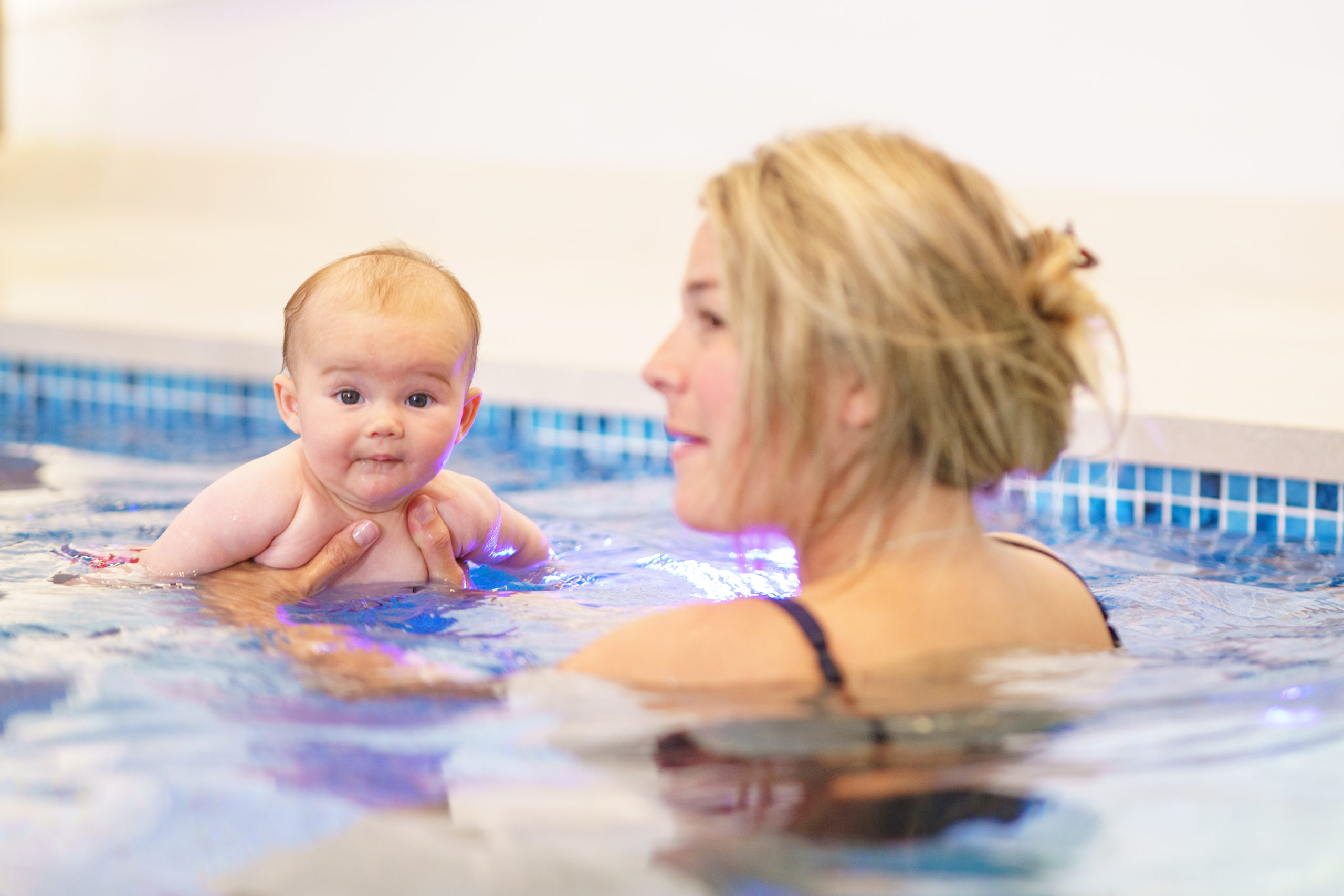
"But what are they actually learning?"
It's a fair question.
If you've ever watched a Parent & Baby swimming class from the side of a pool, you might have wondered what it's all about. There are songs, toys, and plenty of splashing about. Babies are held, moved around and encouraged to kick.
And you might reasonably think, "Couldn't I just do that myself?".
You can certainly play with your baby in the bath, sing songs together at home, and splash about on holiday or at the local pool. But a good baby swimming lesson is doing something rather more thoughtful than simply entertaining your child in the water: it's giving babies the chance to experience movement, touch, sound, repetition, and a completely different environment - with you there are a secure base.
And research is increasingly giving us clues as to why that really matters.
Babies learn through experience
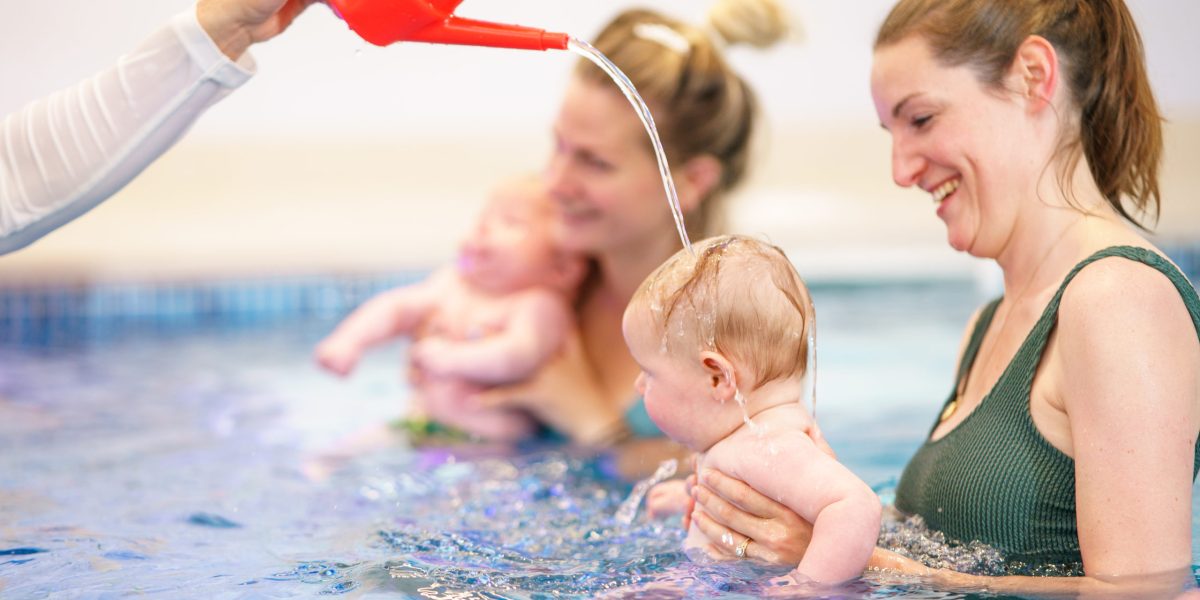
Babies are learning all the time. They are working out what their bodies can do, what happens when they move, how to respond to sounds and voices, and whether something unfamiliar feels safe.
Water gives them a particularly interesting environment in which to do this: It supports their body differently. Movement feels different. Sounds are different. They have to adjust to being moved and supported in ways that feel very different to being on the ground.
A simple activity like reaching for a toy or turning towards a parent in the water can involve far more learning than it might appear to.
There is growing research into these early aquatic experiences. A 2026 systematic review and meta-analysis brought together 25 controlled studies involving more than 3,500 babies and toddlers. While researchers stated that more rigorous studies are still needed, they found favourable associations between between formal aquatic activities and several developmental outcomes, including motor and neurodevelopmental measures.
So, no, we can’t say that taking your baby swimming will make them develop faster. But there is increasing good reason to think that what babies do in the water can be a valuable part of their early development.
And then there's the IQ question
This is probably the bit that has attracted a lot of attention recently.
A study published in Scientific Reports in August 2026 followed 1,935 mother-child pairs and looked at whether babies who had taken part in swimming during their first six months had different cognitive scores when they reached age four to six.
Children who had participated in baby swimming had modestly higher scores across several measures, including IQ, verbal comprehension, visual-spatial skills, fluid reasoning and working memory.
Interesting? Absolutely.
Proof that swimming makes babies more clever? No.
This was a cohort study, which means it found an association rather than ‘proof’ that swimming caused the difference. Families who take their babies swimming may differ in other ways too – their routines, resources, parenting, education or the other experiences they provide.
Swimming doesn’t need to be sold as a way to make your baby smarter.
There’s already plenty going on! Your baby is moving, listening, watching and feeling. They are remembering, and responding to you. They’re experiencing something something new – and then doing it again. That’s a pretty good reason to spend time in the water.
The song isn't the lesson
So, back to that original question – “Couldn’t I just do that myself?”.
You absolutely can enjoy the water with your baby beyond a swimming lesson. In fact, we want you to.
But there’s a difference between playing in the water and having someone who understands how babies learn to help you get the most from the experience.
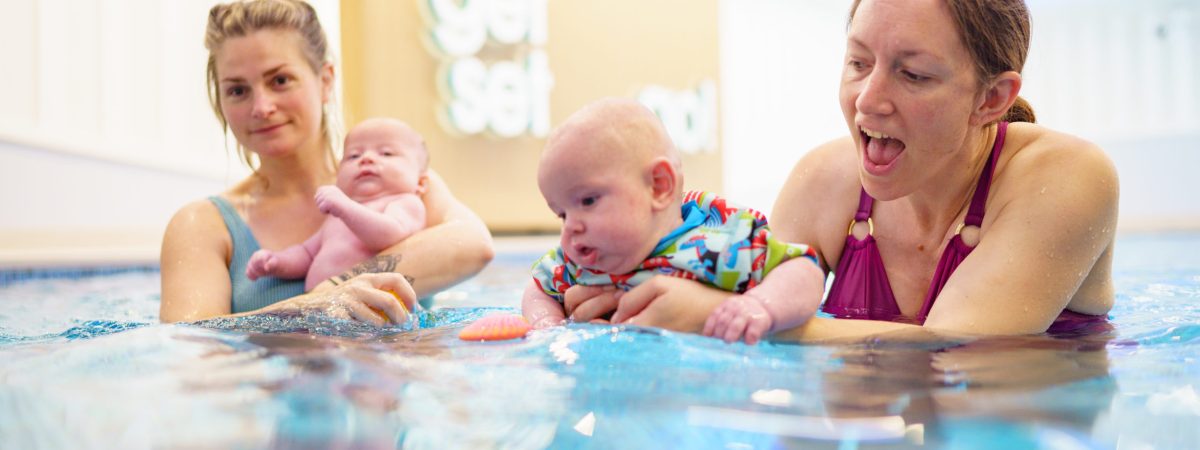
The songs and toys are just tools.
A familiar song can help a baby recognise a routine and anticipate what’s coming next.
A repeated game gives them the opportunity to practise skills in a fun way.
A toy can encourage them to reach, turn, look or move towards something.
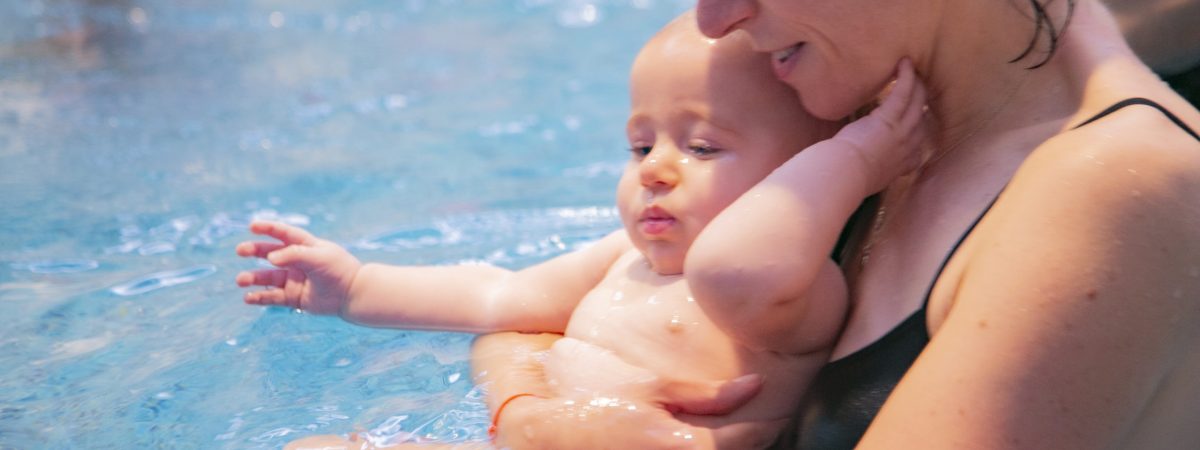
And doing it all with a parent or caregiver gives them something even more important: bonding.
Your baby hears your voice, feels your hands, looks at your face – and learns that you are there when things might feel unfamiliar. And that really matters.
It's not just what they learn - it's how they experience it
Child development experts place a lot of emphasis on regulation, relationships and repeated experiences – helping children feel safe before asking them to try something new.
That feels particularly relevant with babies.
A baby who is held by their parent, hears a familiar voice, repeats a simple activity, and gradually gets used to a new sensation is having a very different experience to a baby who is being pushed too quickly.
It’s one reason why we don’t see baby swimming as a checklist of skills to get through – the experience matters just as much.
At GetSetSwim, we build familiarity first
Our Parent & Baby classes are designed around the idea that confidence comes before performance.
We want babies to become comfortable in the water.
We want parents to learn how best to support them.
We use repetition so that things become familiar.
We introduce experiences gradually – and never force things.
And we give each baby the time to respond rather than expecting every child to do the same thing at the same moment.
One might happily put their head under the water while another may need a few more weeks to adjust.
One might be super comfortable being moved around the water while another needs to stay held by Mum or Dad. Neither is doing it wrong. They’re both learning – and part of good teaching is knowing when to encourage a child forward and when to give them that little bit more time.
You're learning too
Yep, that’s right. It’s not just your baby who’s learning in the water – you are too.
You learn how your child responds to water.
How to hold them securely without restricting their movement.
How to recognise when they’re enjoying something and when they’ve had enough.
You learn how to make the water feel familiar – and, gradually, how to let go a little.
That’s important as the long-term goal isn’t to have them depending on adult but to give them the positive and confident start in the water for them to build on as they grow older.
So, are baby swimming lessons worth it?
We think so – but not because every baby who swims is going to become a genius. And not because a 30-minute class is somehow going to transform your child’s development.
The evidence is interesting and increasingly positive, but it is still developing.
What we do know is that the water gives babies a chance to experience movement, repetition, sensory stimulation and new challenges in a very different environment. And when that experience is warm, playful, well taught and shared with a parent, it can be much more than songs and water toys.
Those first swims are the beginning of a relationship with the water. And that’s what we’re really trying to build.
Learn more about our Parent & Baby swimming classes which run 50-weeks of the year, in Putney, Fulham, South Kensington and Golders Green.